



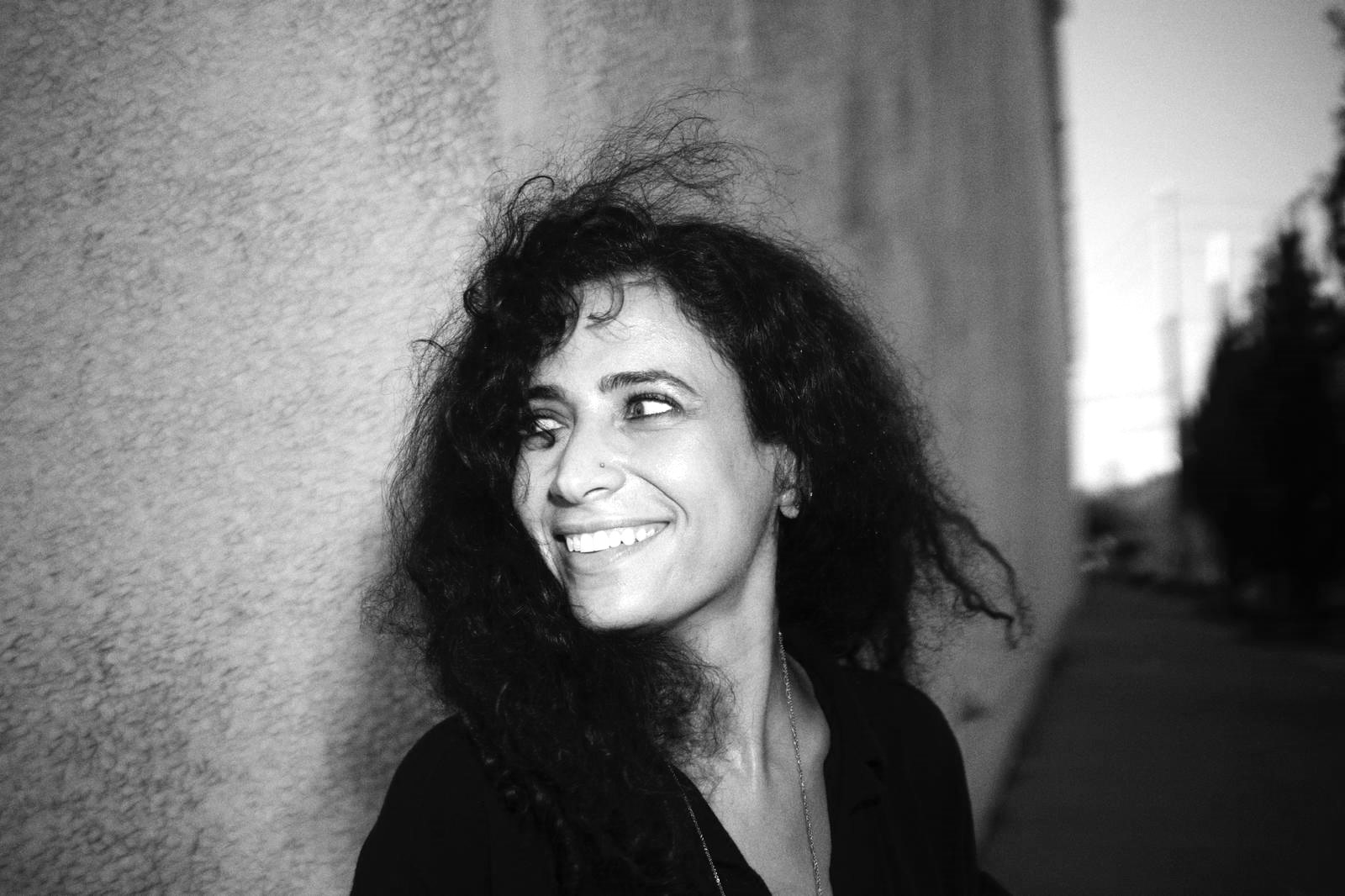
Hala Alyan es una poeta y narradora palestino-estadounidense nacida en Carbondale, Illinois, Estados Unidos, en 1986. Es autora de las novelas Salt Houses («Casas de sal»), ganadora del Dayton Literary Peace Prize y del Arab American Book Award, y finalista del premio Chautauqua, y The Arsonists’ City («La ciudad de los incendiarios»), finalista del Aspen Words Literary Prize. También es autora de cinco poemarios, entre ellos The Twenty-Ninth Year («El vigésimo noveno año») y The Moon That Turns You Back («La luna que te devuelve»). Su obra ha aparecido en The New Yorker, The New York Times, The Guardian, The Academy of American Poets y Guernica. Vive en Brooklyn con su familia, y además de escribir ejerce como psicóloga clínica y profesora en la Universidad de Nueva York. Su escritura aborda aspectos de la identidad y los efectos del desplazamiento, especialmente en la diáspora palestina. Presentamos una selección de poemas traducidos al español por Miguel Muñoz-Repiso.
***
Cuando ellos dicen jura lealtad, yo digo…
mi boca es un fantasma // una boca que intenta decir lo siento y le salen solo humo y niebla // le salen solo ciudadana, bala y semilla // mi país es una máquina // un conjuro de mal tiempo // una pluma entrelazada en el pelo negro de mi madre // quiero decir, su pelo teñido // quiero decir, su pelo hace juego con mi país // tan brillante y tan de prestado y tan pintado // mi país es un número
o sea,
es 1948 y mi tatarabuela extiende la masa del pan con las manos // y mi otra tatarabuela reza con las manos // una mira su tierra desaparecer // la otra construye su casa en una tierra que va a desaparecer
mi país es una cola en el aeropuerto un año de autopistas un entreacto // mi país es síndrome de Estocolmo // es una boca inmigrante que dice gracias que dice por favor que dice // mi país no es país sino fantasma // no es nadie sino fantasma // mi país está muerto // mi país es nombrar a los muertos // darles su sal
mi país es una boca intentando jurar pero solo le sale sal // mi país es una boca y nadie puede pronunciar mi nombre // quiero decir, mi país olvida mi nombre // quiero decir, mi país está siempre pidiendo mi nombre // y yo siempre lo digo dos veces // lo deletreo, como una dirección // mi país es un número
o sea,
es 1967, y los líderes árabes gritan y todas las madres se aferran // a los hijos que han dejado y mi bisabuela pone a mi madre un nombre, // nostalgia, mientras mi otra bisabuela pone a mi padre un nombre, // fusil, // mi país es todo fantasma // mi abuela es toda fantasma // mi abuela es un país, quiero decir, mi abuela es mi país // quiero decir, mi país es una mentira es una casa vaciada es mil cajas de cartón // mi país es ¿te acuerdas de cuando dejamos Akka? // quiero decir, Gaza // quiero decir, Homs // mi país es un número
o sea,
es 1990 // mi madre está cruzando una frontera, quiero decir, un desierto, quiero decir, la vida // yo camino pegada a ella // estoy prestando atención // quiero decir, estoy aprendiendo a rezarle a una bandera // quiero decir, estoy aprendiendo inglés // quiero decir, estoy olvidando el árabe
o,
es 1994 y me estoy enamorando de un chico blanco // un hábito que nunca dejé
o,
es 2006 y mis abuelos se niegan a ser evacuados // no huirán de otra guerra // y yo me paso el verano soñando con inundaciones // coleccionando balas y amando a la persona equivocada
o,
es 2003 y estoy en Beirut viendo Bagdad arder por culpa de América // quiero decir, estoy en mi país // viendo mi país arder por causa de mi // país,
o,
es 2016 y ¿quién lo vio venir?, // algunos lo vieron venir,
o,
es 2020 y las mujeres de Beirut son un mar // quiero decir, mi país // luce bonito de rojo, // quiero decir, yo luzco bonita de rojo // quiero decir, a este país le gusto de rojo
o,
es cualquier año y mi país es tomado // quiero decir, mi país es tierra robada // quiero decir, todos mis países son tierra robada // quiero decir, a veces estoy en el lado equivocado del robo // mi país es una abertura // quero decir que florece // pero no como una flor // sino como una bomba // mi país es una maestra // o sea, ¿quieres ver mi pasaporte? // o sea, ¿te gusta mi acento? // los robé // es decir, los robé // es decir, de quién creéis que aprendí
***
¿Qué es lo más americano de ti?
Mi boca, mis nervios. Los seis acentos de mi acento.
Mi forma de cruzar la calle sin mirar dos veces.
De llenar una maleta sin mirar dos veces.
De despertar al alba y a la nada.
Mi forma de contar la matanza por meses.
Uno, dos, tres, cuatro.
Mi boca. Seguir creyendo que me puede sacar de un lío.
Que cuando un soldado pregunta de dónde
yo digo de aquí y luego de aquí y luego de ningún sitio.
Que cuando un soldado me toca el pelo
y dice quién sabe lo que llevas ahí escondido
yo digo sí, digo lo siento me lo dio una mujer,
no se preocupe, está muerta, arrasasteis su pueblo.
Cinco, seis, siete, ocho.
Cuántos meses hay en un cuerpo.
Cuántas cunas en una estirpe.
Un padre camina por las calles y dice:
Esto es un niño. Esto es un niño. Esto es un niño.
Mi boca.
Cómo confiesa lo que nadie ha pedido.
Cómo olvida las palabras para jasra, jayyal, istislaam.
Cómo siempre está contando una historia.
Hubo una vez un hombre. Un anillo. Una frontera rasgada como el papel.
Una vez un ejército prohibió los vestidos de boda
y las manzanas y los pianos y los niños se convirtieron en datos
y el ruido asoló la tierra
y Lorca dice mi casa no es ya mi casa
y Darwish dice olvidé, como tú, de morir.
Y ¿cómo no ir a hacerse la foto?
¿Cómo llamar al agua que nadie puede beber?
¿Qué es lo más americano de ti?
Mi boca. Mi voz alta. Mi dólar.
Cómo va por los bolsillos hasta el misil,
se aloja en la costilla de un chico.
Mi río, mi árbol, mi anillo.
Cómo sigo amando la luna
aun cuando el dron,
aun cuando el checkpoint,
aun cuando los niños coman eso que comen.
Ay, pero la luna.
Una vez brilló sobre Ŷubayl.
Una vez llevé vestido y entré en una habitación con música.
Una vez devolví un anillo.
Lo siento. Olvida el anillo. Olvida la luna.
Un padre camina en las calles y dice:
Esto es un país. Esto es un país. Esto es un país.
En Manhattan es un mes nuevo
y ella, antes de morir, no muere.
Antes de morir dice ‘ahora los demás debéis vivir’.
Así que vivimos y vivimos y vivimos.
Nos reunimos en la iglesia junto al parque, a escuchar su voz.
Decimos ‘esto es vivir’.
Decimos sí. Decimos yo amo, yo amo, yo amo.
Una vez un hombre dijo
le voy a meter fuego al inglés de tu boca
y lo que quería decir era
soy como tú,
soy peligroso y finjo no serlo.
Olvida a ese hombre.
Digo que quiero rehacerme: en una terminal en Belfast,
en una manifestación con diez mil personas,
en una cama en Greenpoint,
que me toquen hasta olvidar mi propio nombre.
Lorca dice solo tu corazón caliente.
Darwish dice deseo del amor solo el principio.
Así que esta es mi memoria americana.
Corta, como una canción.
Aquí está el mar de mi abuela:
se mueve y centellea, como un rumor,
visible desde todas las ventanas.
Oh, tierra interrupta,
oh, road trip al pasado.
Olvida el pasado.
Lo que intento decir es que me encantan los interrogatorios.
Lo que intento decir es que hicieron de los vestidos un crimen.
¿Quién recuerda la música?
¿Quién respira a través del escombro?
Una vez un lugar explotó
y mi padre se hizo ficción.
No me hables de septiembre.
He olvidado, ¿de quién era marido ese tipo?
¿Mío? No, mío no.
Quién nació dónde. De quién es
el soldado que me apuntó con un arma y me espetó
tú, guapa, siéntate.
¿Qué es lo más americano de ti?
¿Era tu pelo o tu cuchillo?
¿Tu podredumbre o tu metáfora?
Una vez hice autoestop desde una azotea hasta el mar.
Me marché durante la guerra.
Volví, dormí en un banco, dormí un año entero
y las paredes eran amarillas y las
bombas hacían temblar las ventanas y nadie murió.
¿Qué crees que haría yo con un misil?
Mis rodillas a tierra.
Mi dios en la cuerda floja,
y no puedo dejar de soñar con esos vestidos,
con las palas,
con los niños,
cómo un nombre dijo que moriría
pero vivió y luego marchó.
Lorca dice por qué nací entre espejos.
Darwish dice si tiene que haber luna, que esté alta.
Una vez, mi abuela dejó un pueblo
y en su lugar construyeron un parque acuático.
Una vez dejé mi nombre en la boca de un hombre
y creo que ha llegado el momento de recuperarlo.
Olvida la luna. Estoy diciendo que quiero vivir.
Quiero oír la voz de ella cada mañana.
Quiero música. Quiero vino.
Quiero el acento equivocado, el mar equivocado,
las manos equivocadas en mi garganta.
Eso quiero.
Quiero lo que quiero
y eso es lo más americano de mí.
Estoy diciendo olvida mis manos.
No hay ningún checkpoint cerca.
Yo soy la medianoche pasada,
dos kilómetros al oeste, hacia el agua,
y desde aquí este río podría casi ser un mar
y este país podría casi ser un país.
Y ¿cómo me atrevo a hablar del amor?
¿Dónde están los vestidos ahora?
¿Quién les hace su dobladillo de encaje?
¿Qué manos remiendan el blanco?
¿Qué manos contarán los cuerpos?
¿Quién recordará lo que hicieron?
¿Quién vivirá toda esta vida?
***
1999
Yo ya había vivido en un desierto. En serio. Olvidé el za’atar que mi madre decía que me daba en Irak. Olvidé la casa de mi abuela en Suu-ri-ya. Ahí estaba yo, comiendo los higos chumbos aunque siempre me picase la lengua luego. En Tejas, una profesora me dijo que yo nunca aprendería a pronunciar mi propio nombre en inglés, y tenía razón. Lloré hasta que mi madre me llevó a un McDonald’s. En esa casa yo era la única niña. Bailaba en el invierno caluroso. Diez años después, un niño me dejaría el brazo lleno de marcas por haberle llamado redneck. Me llevé el cortavientos rosa de Barbie que una niña se dejó en el patio de la escuela. No tenía nada en los bolsillos. Antes incluso de que saliera el sol, mi padre salía fuera a fumar y mirar los pájaros volar al este. Los más feos eran los que más le gustaban.
=
Nunca había visto el auténtico desierto: macizos de cactus y arena blanca como la leche, una arena que corría durante días, el rojo pintalabios del ocaso. Ahí estaba yo, escarbando en montones de libros de la biblioteca para robar los mejores, formando con mi sábana un gurruño con forma de boca para besar. No me dio tiempo a zafarme y el niño me metió la mano bajo la blusa. Me mataba de hambre para matar de hambre a mi madre. En aquella casa construimos una casa para cada uno, los maizales eran filas de mujeres de pelo oscuro tras la sequía invernal. Diez años después, un hombre se enamorará porque reconoce en mí el Medio Oeste. Me dejará una nota en un pliegue de mi abrigo. Cuando habíamos cerrado con cinta a la última caja, mi padre miró la casa una última vez, se dio la vuelta hacia el Dodge, de camino a empezar todo de nuevo.
***
When They Say Pledge Allegiance, I Say
my country is a ghost // a mouth trying to say sorry and it comes out all smog // all citizen and bullet and seed // my country is a machine // a spell of bad weather // a feather lacing my mother’s black hair // I mean her dyed hair // I mean her blonde hair // I mean her hair matches my country // so shiny and borrowed and painted over // my country is a number
like—
it is 1948 and my great-great-grandmother flattens bread with her hands // while my other great-great-grandmother prays with her hands // one watches her land disappear // the other builds a house on land that will disappear
my country is an airport line a year of highways an intermission // my country is Stockholm syndrome // is immigrant mouth saying thank you saying please saying // my country is no country but ghost // is no man but ghost // my country is dead // my country is name the dead // give them their salt
my country is a mouth trying to say pledge and it comes out all salt // my country is a mouth and nobody can pronounce my name // I mean my country forgets my name // I mean my country is always asking for my name // and I’m always saying it twice // spelling it like an address // my country is a number
like—
it is 1967 and every Arab leader is crying every mother is clutching // the sons she has left and my great-grandmother names my mother // nostalgia while my other great-grandmother names my father // a gun // my country is all ghost // my grandmother is all ghost // my grandmother is a country I mean my grandmother is my country // I mean my country is a lie is an emptied house is one thousand cardboard boxes // my country is remember when we left Akka // I mean Gaza // I mean Homs // my country is a number
like—
it is 1990 // my mother is crossing a border I mean desert I mean life // I am at her heels // I am paying attention // I mean I am learning to pray to a flag // I mean I am learning English // I mean I am forgetting Arabic
or—
it is 1994 and I am falling in love with a white boy // a habit I’ll never kick
or—
it is 2006 and my grandparents won’t evacuate // won’t leave another war // and all summer I dream of floods // collect bullets and love the wrong person
or—
it is 2003 and I am in Beirut watching Baghdad burn because of America // I mean I am in my country // watching my country burn because of my // country
or—
it is 2016 and who saw it coming // some saw it coming
or—
it is 2020 and the women in Beirut are a sea // I mean my country // looks beautiful in red // I mean I look beautiful in red // I mean this country likes me in red
or—
it is every year and my country is taken // I mean my country is stolen land // I mean all my countries are stolen land // I mean sometimes I am on the wrong side of the stealing // my country is an opening // I mean bloom // I mean bloom not like flower // but bloom like explosion // my country is a teacher // I mean do you want to see my passport // I mean do you like my accent // I mean I stole them // I mean I stole them // I mean where do you think I learned that from
***
What is the most American thing about you?
My mouth. My nerves. The six accents in my accent.
The way I cross a street without looking twice.
Fill a suitcase without thinking twice.
Wake at dawn to nothing.
The way I count a slaughter in months.
One, two, three, four.
My mouth. That I still believe it can get me out of trouble.
That when a soldier asks from where I say
here then here then nowhere.
That when a soldier touches my hair
and says who knows what you might be hiding in there
I say yes say sorry say I got it from a woman.
Don’t worry. She’s dead. You flooded her village.
Five, six, seven, eight.
How many months are in a body.
How many cradles are in a bloodline.
A father walks the streets and says:
This is a child. This is a child. This is a child.
My mouth.
The way it makes confessions nobody asked for.
The way it forgets the word for 7asra, khayyal, istislaam.
The way it’s always telling a story.
Once there was a man. A ring. A border shredded like paper.
Once an army banned wedding dresses
and apples and pianos and the children became memos
and the land flattened with noise
and Lorca says nor is my house any longer my house
and Darwish says I forgot like you to die
and what do you call a photo op?
What do you call water that nobody can drink?
What is the most American thing about you?
My mouth. My loud. My dollar.
How it goes from pocket to pocket to missile,
lodges itself into a boy’s rib.
My river, my tree, my ring.
How I still love the moon
even when drone
even when checkpoint
even when children eat what do they eat.
O but the moon.
Once it glowed in Jbail.
Once I wore a dress and walked into a room of music.
Once I gave a ring back.
I’m sorry. Forget the ring. Forget the moon.
A father walks the streets and says:
This is a country. This is a country. This is a country.
In Manhattan it’s a new month
and before she dies, she doesn’t die.
Before she dies, she says now the rest of you have to live.
So we live and live and live.
We gather in a church by a park to listen to the sound of her voice.
We say this is living.
We say yes. We say I love, I love, I love.
Once a man said I will burn the English from your mouth
and what he meant was
I am like you
dangerous and pretending not to be.
Forget the man.
I’m saying I want to be remade: in a Belfast terminal, in a ten-thousand-person march,
in a bed in Greenpoint,
to be touched until I forget my own name.
Lorca says just your hot heart.
Darwish says I want from love only the beginning
so here’s my American memory
short as a song
here’s my grandmother’s sea —
it moves bright as gossip, visible from every window
o land of interruption
o road trip into the past. Forget the past.
I’m trying to say I love a good interrogation.
I’m trying to say
they turned dresses into crimes.
Who remembers the music?
Who breathes through rubble?
Once a place exploded and
my father became fictional.
Don’t talk to me about September.
I forget. Whose husband was that? Mine? Not mine.
Whose birthplace. Whose soldier
pointed a gun and said, Hey pretty, sit down.
What is the most American thing about you?
Was it your hair or your knife?
Once I hitchhiked from rooftop to sea, left during the war,
came back, slept on a bench, slept for a year
and the walls were yellow and the
bombs rattled the windows and nobody died.
What do you think I’d do with a missile?
My knees on the ground.
My god on the line
and I can’t stop dreaming about those dresses
the shovels
the children
the way a man said he’d die and then lived and then left.
Lorca says why was I born among mirrors.
Darwish says if there must be a moon, let it be high.
Once my grandmother left a village
and they put a waterpark in its place.
Once I left my name in a man’s mouth
and I think it might be time to go get it.
Forget the moon. I’m saying I want to live.
I want to hear her voice every morning. I want music. I want wine.
I want the wrong accent, the wrong sea, the wrong hands on my throat, I want what
I want what I want and this
is the most American thing about me.
I’m saying forget my hands. I’m nowhere near a checkpoint.
I’m ten past midnight
a full mile west to the water
and from here this river could almost be a sea
this country could almost be a country
and how dare I speak of love?
Where are the dresses now?
Who hems their lace?
Whose hands collect white?
Whose hands count bodies?
Who will remember what was done?
Who will do all this living?
***
1999
I had lived in a desert before. I did. I forgot the za’atar my mother said she fed me in Iraq. I forgot my grandmother’s house in Soo-ree-yaa. There I was, eating the prickly pears even though they always made my tongue itch. A teacher in Texas told me I’d never learn how to pronounce my own name in English and she was right. I wept until my mother took me to McDonald’s. In that house I was the only child. I danced in the hot winter. In ten years, a boy will leave marks on my arm because I call him a redneck. I stole a Barbie pink windbreaker from the cubbyhole at school. There was nothing in the pockets. Even before the sun rose, my father went outside to smoke and watch the birds fly east. He loved the ugly ones best of all.
=
I had never seen true desert before: cactus beds and milk-white sand, sand that ran for days, the lipstick-red of dusk. There I was, digging through piles of library books to steal the best ones, lumping my bedsheets into a mouth to kiss. I wasn’t quick enough to stop the boy’s hand under my shirt. I starved myself to starve my mother. In that house we made a house for each of us, the cornfields a row of brunettes after the winter drought. In ten years, a man will fall in love because he recognizes the Midwest in me. He will leave a note in the pleat of my coat. When the final box was taped up, my father eyed the house once more before turning back toward the Dodge, destined to do it all over again.
También te puede interesar

Hala Alyan, una poeta con ojos para ver sin velos su realidad y mostrarla al mundo. Excelente!